
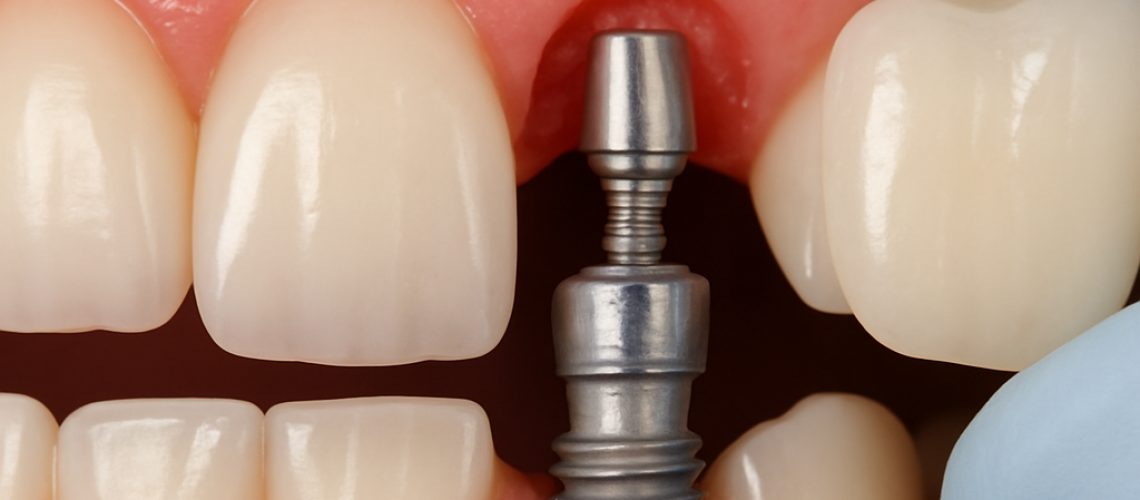
For most patients missing a single tooth, a dental implant is the strongest, longest-lasting replacement option because it replaces the tooth root as well as the crown — unlike a bridge or partial denture, which only replace the visible tooth. Most healthy adults with adequate jawbone are candidates, and the process typically takes three to six months from placement to final crown.
Losing one tooth doesn't feel as dramatic as losing several, so it's easy to put off doing anything about it. But a single gap changes more than you'd expect — neighboring teeth can drift into the space, your bite can shift, and the jawbone under the missing tooth begins to shrink almost immediately. The good news is that replacing a single tooth is one of the most predictable procedures in implant dentistry, and it's a service we provide to patients throughout Ocala and Fruitland Park.
Your Three Real Options
A dental implant places a small titanium (or zirconia) post directly into the jawbone where the root used to be, topped with a custom crown. It stands on its own — no impact on the teeth next to it.
A dental bridge anchors a replacement tooth to the two teeth on either side of the gap, usually by capping them with crowns. It works, but it means reshaping otherwise-healthy teeth to support it.
A removable partial denture fills the gap without surgery or altering neighboring teeth, but it comes out for cleaning and doesn't stop the bone beneath the gap from shrinking over time.
Why an Implant Is Usually the Strongest Choice
A missing tooth root means the jawbone in that spot no longer gets the stimulation it needs, so it gradually resorbs — a slow process that can eventually change the shape of your jaw and face. It's the same bone-loss process that makes untreated gum disease so damaging over time. An implant is the only one of the three options that replaces the root itself, which keeps that bone stimulated for as long as the implant is in place. It also doesn't require touching the healthy teeth on either side, the way a bridge does.
Are You a Candidate?
Most healthy adults with enough bone density and healthy gums are good candidates for a single-tooth implant. A few things we check for at the consultation:
- Enough bone volume at the site (bone grafting can usually resolve a shortfall)
- Healthy, disease-free gums
- Any chronic conditions, like uncontrolled diabetes, that could affect healing
- Whether you're a smoker, since tobacco use slows healing and integration
What the Process Looks Like
- Consultation and imaging — a 3D scan lets us plan the exact position and angle of the implant.
- Implant placement — a short in-office procedure, usually under local anesthesia.
- Healing (osseointegration) — the implant fuses with your jawbone over roughly three to six months.
- Final crown — once healing is confirmed, we attach a custom-matched crown built to blend in with your natural teeth.
Frequently Asked Questions
How long does a single tooth implant last? With good oral hygiene and regular checkups, an implant post can last decades — often a lifetime — though the crown on top may need replacement after 15-20 years of normal wear.
Does getting an implant hurt? Placement is done under local anesthesia, and most patients describe the discomfort afterward as comparable to a tooth extraction — manageable with over-the-counter pain relief.
Is a single implant more expensive than a bridge? The upfront cost is often higher, but a bridge typically needs replacement every 10-15 years and can require altering healthy teeth, so implants are frequently more cost-effective over time. We can walk through financing options at your consultation.
What if I don't have enough bone for an implant? Bone grafting can often build up the site enough to support an implant, even if you were told years ago that you weren't a candidate.
Next Steps
If you're missing more than one tooth or an entire arch, our full mouth dental implant options may be a better fit. For a single tooth, the best next step is a consultation where we can look at your bone structure and give you a direct answer. Browse more answers on our Dental Implant FAQ page, or contact our dentists in Ocala, FL to schedule.