
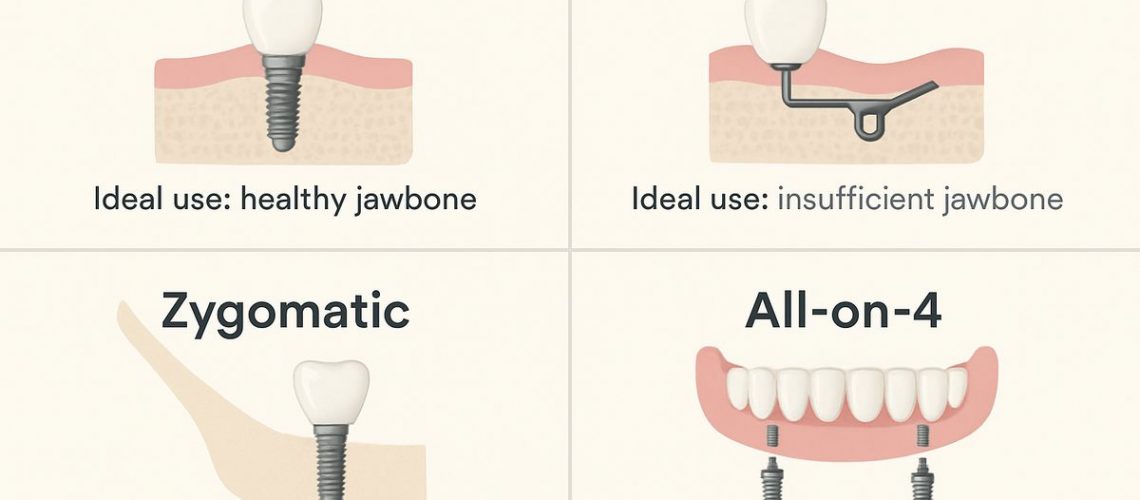
Choosing between different dental implants types matters because the right option affects function, looks, cost, and healing time. This clear, 500-word overview explains common dental implants types, how each is used, and practical questions to ask your dentist. Use this to quickly understand which solutions may suit your needs and what to expect next.
Common Dental Implants Types
Endosteal (Root-Form) Implants
Endosteal implants are the most common dental implants types. A titanium screw is placed in the jaw to act like a tooth root. They support single crowns, bridges, or implant-supported dentures and work well when you have adequate bone.
Subperiosteal Implants
Subperiosteal implants use a metal framework that sits on top of the jawbone, under the gum. They are an option when jaw bone is too shallow for standard implants and bone grafting is not ideal.
Zygomatic Implants
Zygomatic implants anchor into the cheekbone (zygoma) and are used for severe upper jaw bone loss. They are longer and bypass the weak upper jaw to provide stable support for a fixed prosthesis.
All‑on‑4 / Full‑Arch Implant Solutions
All‑on‑4 uses a few implants to support a whole arch of teeth. This full‑arch option provides fast, stable restoration for people missing most or all teeth and often avoids extensive grafting.
Which Implant Type Fits Common Situations?
Single Tooth Replacement
A single endosteal implant plus a crown is the typical choice for one missing tooth. It preserves nearby teeth and restores chewing and appearance.
Multiple Adjacent Teeth
When several adjacent teeth are missing, implants can support a bridge or individual crowns. Fewer implants may be used to support a multi‑unit bridge for cost and efficiency.
Jaw‑Wide Tooth Loss Or Failing Teeth
All‑on‑4 or other full‑arch prostheses are preferred when most or all teeth in a jaw are missing or failing. They restore function quickly and reduce treatment time.
Severe Bone Loss
Severe bone loss may call for zygomatic implants or bone grafting (BMP or PRGF) before standard implants. Your surgeon will recommend the safest, most predictable route.
Key Factors That Decide The Right Dental Implants Types For You
Decisions hinge on bone volume and density, overall health (diabetes, smoking), esthetic goals, timeline, and budget. For example, limited bone might point to subperiosteal, zygomatic, or All‑on‑4 options instead of multiple endosteal implants.
What To Expect With Each Type: Surgery, Recovery, And Timeline
Surgery ranges from simple implant placement to complex grafting or zygoma anchoring. Healing can take weeks to months; final restorations are placed after integration unless same‑day crowns are offered. Digital planning, CAD/CAM, and in‑office labs can allow faster, same‑day or rapid provisional restorations for some dental implants types in Ocala, FL.
Questions To Ask Your Dentist About Dental Implants Types
- How many of this implant type have you placed?
- What are my alternatives and why do you recommend this one?
- Do you use 3D planning and surgical guides?
- Do you offer PRGF, BMP, or piezosurgery for grafting?
- Is there an in‑office lab or CAD/CAM for faster restorations?
- What are costs, financing options, and the expected timeline?
Why Consider Dental Implants Of Ocala For Complex Implant Cases
For complex cases involving dental implants types in Ocala, FL, Dental Implants of Ocala offers an experienced team led by Dr. Rami Al Saidi and Dr. Matthew Moye. The practice uses a digital workflow with CAD/CAM, 3D planning, an in‑office lab, PRGF, BMP options, and piezosurgery for precise, predictable care. They treat full‑arch All‑on‑4 cases and zygomatic implants when needed. Schedule a consult to review which dental implants types in Ocala, FL fit your goals and timeline.