
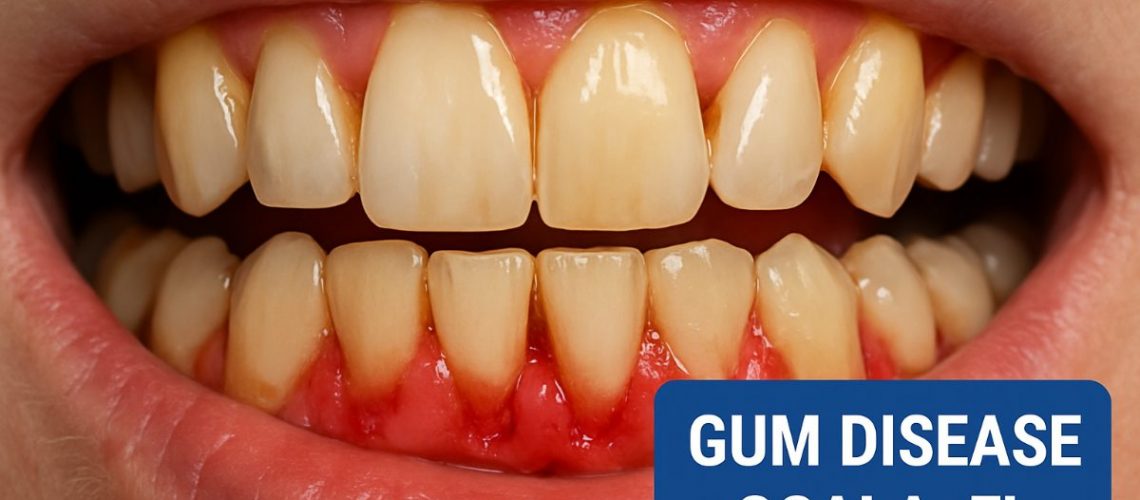
Gum disease is a common infection that harms the gums and the bones that support your teeth. If you’re searching for gum disease ocala fl, this article explains what gum disease is, the symptoms to watch for, what causes it, and the treatments available. Read on to learn how early care can protect your smile and when to seek professional help.
What Is Gum Disease?
Gum disease starts as gingivitis, which is reversible inflammation of the gums caused by plaque. If left untreated, it can progress to periodontitis, where the infection destroys the bone and soft tissues that hold teeth in place. Early diagnosis matters because treating gingivitis is much easier and less costly than fixing advanced periodontitis. For anyone concerned about gum disease ocala fl, routine exams catch problems before they worsen.
Common Symptoms Of Gum Disease in Ocala, FL
Early signs
Early symptoms include gums that bleed when brushing or flossing, red or swollen gums, and persistent bad breath. These signs mean bacteria and plaque are irritating the gum tissue. Noticing any of these symptoms should prompt a dental visit to evaluate for gum disease ocala fl and to start care before damage progresses.
Advanced signs
Advanced gum disease can cause receding gums, making teeth look longer, loose teeth, pus between teeth and gums, and changes in bite or dentures that no longer fit. If you see these problems, you may have periodontitis that needs deeper treatments to stop further bone loss.
What Causes Gum Disease in Ocala, FL?
Plaque, tartar, and bacteria
Gum disease starts when plaque—sticky film of bacteria—builds up on teeth. If plaque isn’t removed, it hardens into tartar, which can only be removed by a dental professional. The bacteria cause inflammation, which can lead to infection and tissue breakdown.
Contributing medical and lifestyle factors
Certain factors make gum disease more likely or more severe. Smoking reduces blood flow to the gums and weakens healing. Diabetes, especially if uncontrolled, raises infection risk. Some medications cause dry mouth, increasing plaque buildup. Stress, poor nutrition, and genetics also play roles in susceptibility to gum disease ocala fl.
Who Is At Higher Risk?
People at higher risk include older adults, smokers, those with uncontrolled diabetes, and people taking medications that reduce saliva. A history of irregular dental care or poor oral hygiene also raises risk. If you live in Ocala, FL and fit one or more of these categories, consider more frequent checkups to screen for gum disease ocala fl.
How Dentists Diagnose Gum Disease
Dentists diagnose gum disease with a visual exam and periodontal probing to measure pocket depths between the teeth and gums. Deeper pockets often mean more severe disease. Dental X-rays show bone loss. In some cases, intraoral cameras or 3D imaging help map defects and plan treatment.
Treatment Options For Gum Disease in Ocala, FL
Non-surgical care
For early and moderate disease, non-surgical treatments often work well. Professional cleanings remove plaque and tartar. Scaling and root planing (deep cleaning) remove bacteria below the gum line and smooth tooth roots. Improved home care, antimicrobial rinses, and sometimes local antibiotics help control infection.
Surgical and advanced care
When pockets are deep or bone is lost, surgical options may be needed. Flap surgery cleans roots under the gums. Bone grafts and guided tissue regeneration help rebuild lost bone. Soft-tissue grafts can cover exposed roots. If teeth are lost, implant-based restorations may be discussed to restore function and appearance.
Home Care & Prevention Tips For Gum Disease in Ocala, FL
Daily brushing and flossing are the first defense. Use interdental cleaners to remove plaque between teeth. Stop smoking, manage blood sugar if you have diabetes, and eat a balanced diet to support healing. Regular dental checkups and cleanings are essential to prevent or control gum disease ocala fl. Your dentist may recommend prescription rinses or more frequent cleanings if you are at higher risk.
When To See A Specialist
Seek prompt evaluation for rapid tooth mobility, deep pockets, persistent pus, or severe pain. These are red flags that require immediate care. Referral to a periodontist or an implant team is appropriate when advanced therapies like grafting or implants are needed to save or replace teeth.
Advanced Technologies That Improve Outcomes
Modern tools can improve diagnosis and treatment. Intraoral cameras and 3D imaging give clear views of bone and soft tissue. PRGF (plasma rich growth factors) and BMP (bone morphogenetic protein) can enhance healing for grafts. Precision tools like PIEZOSURGERY® allow gentle bone work. Digital workflows and same-day milling speed up restorations and improve fit.
How Dental Implants of Ocala Approaches Gum Disease and Tooth Loss
Dental Implants of Ocala treats gum disease ocala fl with coordinated care. Dr. Rami Al Saidi and Dr. Matthew Moye evaluate each case for conservative and surgical options, focusing on predictable, long-term results. The practice uses an on-site lab and a digital workflow to streamline diagnosis, grafting, and implant restorations, which can reduce treatment time and improve outcomes.
Insurance, Costs, And Financing Options For Gum Disease Care in Ocala, FL
Costs depend on disease severity and the treatments needed—routine cleanings cost less than grafting and implants. Some dental insurance plans cover parts of periodontal care, but coverage varies. Many practices offer financing or in-house plans to spread payments. Request a consultation for a personalized estimate and to discuss your insurance and payment options for gum disease ocala fl care.
If You Suspect Gum Disease in Ocala, FL
If you suspect gum disease ocala fl, schedule an exam. Bring your medical history and a list of medications to the appointment. Expect a visual exam, periodontal probing, and possibly X-rays to form a treatment plan. Early action preserves bone and teeth, improves oral health, and protects your overall health—so don’t wait to get checked.