
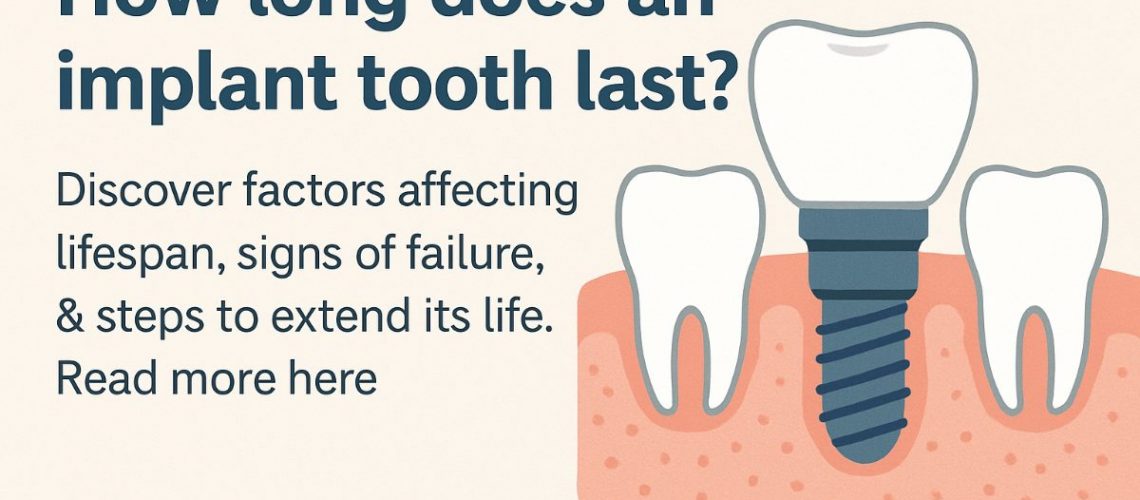
If you’re asking “how long does an implant tooth last,” this post gives clear, evidence-based answers. You’ll learn typical lifespans, the difference between the implant fixture and the crown, the main factors that shorten or lengthen life, signs an implant needs attention, and practical steps to protect your investment. We’ll also explain what to expect if a repair or replacement is necessary and how a local Ocala evaluation can help create a plan tailored to you.
How long does an implant tooth last? Typical lifespans
Studies and long-term clinical reports show dental implants themselves—the metal or ceramic fixtures placed into the jaw—can last 20 years or more, often for life, when well-planned and maintained. The visible part (the crown, bridge, or denture attached to the implant) usually needs more periodic replacement. Expect a typical crown lifespan of 10–15 years; many last longer with good care. So when people ask “how long does an implant tooth last in Ocala, FL,” the short answer is: the implant body can be decades, while the prosthetic crown often requires replacement every decade or so depending on wear and care. Remember that “last” can mean comfortable, usable function—not a perfect, brand-new look.
What affects how long an implant tooth lasts
Surgical placement and implant quality
Precise planning and placement matter. Implants placed with careful 3D planning and surgical guides have higher success rates. High-quality implant systems and proper surgical technique reduce complications. Digital workflows help ensure accurate fit and force distribution, which supports long-term health.
Bone health and grafting
The amount and quality of jawbone are critical. Low bone height or density can lead to unstable implants unless bone grafting is done. Modern options like Bone Morphogenetic Protein (BMP) and plasma-rich growth factors (PRGF) help regenerate bone and soft tissue, improving stability and increasing the odds an implant will last many years.
Patient health and habits
Smoking, uncontrolled diabetes, certain medications, and heavy alcohol use raise the risk of implant failure. Teeth grinders (bruxism) put extra force on crowns and can lead to fractures or loosening. Good overall health and eliminating harmful habits boost implant longevity.
Prosthetic design and materials
A single crown, a bridge, or a full-arch prosthesis (like All‑On‑4) all behave differently. Crowns on single implants often need replacement sooner due to normal wear. Full-arch solutions distribute force across several implants, which can extend function but may require occasional maintenance. Materials (zirconia vs. porcelain-fused-to-metal) and occlusion (how your teeth come together) also affect wear and lifespan.
Ongoing maintenance and follow-up
Regular dental visits for cleanings and exams, plus daily home care, are essential. Routine professional care finds early signs of trouble, such as bone loss or inflammation, and lets your dentist intervene before major problems occur.
Common signs an implant is failing or needs attention
Watch for mobility (any looseness), new or worsening pain, persistent swelling or pus, noticeable gum recession around the implant, exposure of implant threads, and sudden changes in how your bite feels. If you notice any of these, contact your dentist immediately for an exam and imaging.
Practical steps to make your implant last longer
- Brush twice daily with a soft brush and use low-abrasive toothpaste. - Floss daily and use interdental brushes around implants to remove plaque. - Use a night guard if you grind your teeth. - Quit smoking and control chronic conditions like diabetes. - Attend professional checkups and cleanings every 3–6 months if recommended. - Follow any customized maintenance plan your implant dentist prescribes, including periodic X-rays to monitor bone levels.
When a crown or implant needs repair or replacement
Crowns are commonly replaced for wear, fracture, staining, or changes in aesthetics. Replacement is usually quick and less invasive than implant removal. An implant fixture may need removal only in cases of severe infection (peri-implantitis), mobility, or fracture. Removal and replacement are more complex and often require bone grafting and a staged treatment plan. Costs vary widely; many practices offer financing and phased payment options to make care manageable.
Why trust Dental Implants of Ocala for durable implant care
Dental Implants of Ocala combines advanced technology with patient-focused care to improve long-term results. Using digital treatment planning, 3D imaging, CAD/CAM restorations, an on-site lab, PIEZOSURGERY® for precise bone work, and regenerative tools like PRGF and BMP, the team aims to maximize implant predictability. Dr. Rami Al Saidi and Dr. Matthew Moye lead the practice’s implant care with focused training in full-arch restorations and modern surgical techniques, helping patients get durable, well-fitting restorations.
Evaluation, customized plan, and maintenance
If you want a clear answer to “how long does an implant tooth last in Ocala, FL” for your situation, schedule an implant longevity review. Expect an exam, 3D imaging, discussion of your health and goals, and a personalized plan covering surgical options, prosthetic choices, and a maintenance schedule. Book a consultation to get a realistic timeline and cost estimate, and to start a plan that helps your implant last as long as possible.